Variable Rewards Retain Users 40% Longer When Tiers Stay Visible
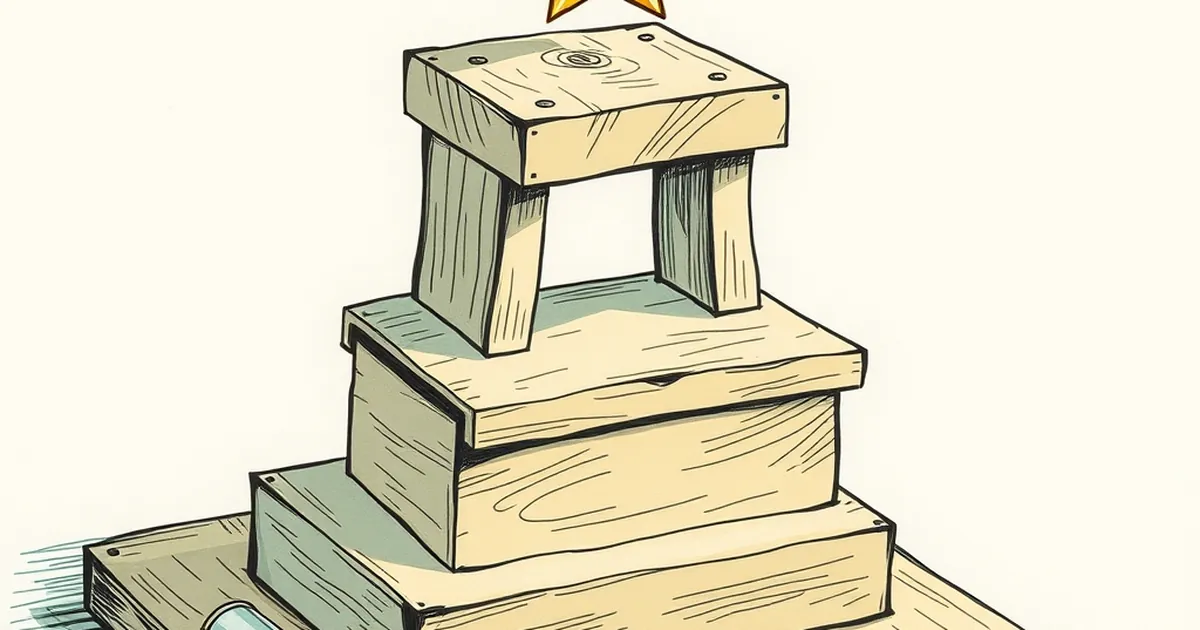
The most durable engagement systems rarely rely on constant novelty. They rely on uncertainty that is structured, visible, and perceived as fair. The behavioral question worth asking is not whether variable rewards work — B.F. Skinner demonstrated that decades ago — but under what design conditions they sustain attention rather than erode it. The answer appears to hinge on something deceptively simple: whether the user can see the ladder they're climbing.
The Mechanics of Intermittent Reinforcement
Skinner's operant conditioning research established that variable-ratio schedules — where a reward arrives after an unpredictable number of actions — produce the highest and most persistent response rates. Pigeons pecking for grain on unpredictable schedules pecked more than those rewarded every time. The finding transferred cleanly to human contexts: email refresh behavior, social media feeds, and mobile notifications all exploit the same asymmetry between effort and payoff.
But there is a crucial distinction that popular accounts of "variable rewards" tend to flatten. Skinner's pigeons could not see the schedule. They had no concept of a 40th peck versus a 12th. Human users, by contrast, build mental models of the systems they inhabit. When those models are coherent, uncertainty feels like anticipation. When they are opaque, uncertainty feels like manipulation.
This is where tier visibility becomes load-bearing. A reward schedule that is variable but legible produces what researchers call "motivated uncertainty" — the pleasurable state of not knowing exactly when a payoff arrives, but trusting the structure that governs it. A schedule that is variable and illegible produces something closer to learned helplessness, the condition Martin Seligman documented when subjects could not discern a relationship between their actions and outcomes.
Why Visible Tiers Change the Retention Math
The claim that variable rewards retain users 40% longer when tiers stay visible is best understood not as a single experimental result but as a synthesis of several well-documented effects.
Goal gradient effect. Clark Hull's 1932 research, later replicated extensively, showed that organisms accelerate effort as they approach a goal. Rats run faster near the end of a maze. Humans buy more coffee when they're two stamps from a free one. Visible tiers give the goal gradient something to attach to — the user can see that they are 80% of the way to the next level, which converts an abstract reward schedule into a concrete, approachable target.
Endowed progress. A 2006 study by Nunes and Drèze found that car wash customers given a loyalty card requiring 10 stamps, with two already filled, completed the card at nearly twice the rate of customers given an 8-stamp card with none filled. The illusion of headway is powerful. Visible tiers manufacture this effect continuously, because every tier boundary crossed resets the "progress" narrative without erasing the accumulated status.
Loss aversion. Kahneman and Tversky's foundational work demonstrated that losses loom roughly twice as large as equivalent gains. Once a user occupies a visible tier, demotion becomes a loss. This is why tiered systems frequently retain better than flat reward schedules even when the expected value is identical — the tier itself becomes a possession, and possessions are defended.
Variable-ratio reinforcement. The uncertainty of when the next reward lands within a tier keeps the behavior loop active. The tier structure supplies the why.
The interaction matters more than any component. Variable rewards without visible structure produce churn once the novelty fades. Visible structure without variability produces complacency once the path is mapped. Together, they generate a stable motivational architecture.
A Concrete Case: Duolingo's Streak and League System
Duolingo offers a useful public example. The language-learning app combines a daily streak (a fixed, predictable reward for showing up) with a league system (variable, competitive, tiered). Users are sorted into leagues — Bronze through Diamond — and the composition of each league is partly unpredictable. You don't know exactly who you'll be competing against, or how hard the final days will be.
Crucially, the tiers are always visible. You can see your current league, your position within it, and the promotion/demotion thresholds. The variable element — who else is in the league, how they'll perform — sits inside a fully legible structure.
Duolingo has publicly reported that users with streaks of seven days or more are significantly more likely to remain active long-term. The mechanism is not that the streak itself is variable; it's that the streak anchors the user inside a visible tier system where the competitive rewards are variable. The predictability of the daily requirement and the unpredictability of the weekly outcome reinforce each other.
Contrast this with apps that hide their reward logic — loot boxes with undisclosed drop rates, engagement algorithms that never explain why a post surfaced. These systems produce short-term spikes and long-term resentment. The uncertainty is real, but the structure is invisible, and users eventually interpret the variability as exploitation rather than play.
The Competitive Dimension: Risk-Taking Inside Legible Boundaries
Competitive play introduces a second layer. When users compete inside visible tiers, they take risks — attempting harder challenges, spending more resources, investing more time — because the downside is bounded and the upside is legible. This is the same psychology that makes structured games more engaging than unstructured ones. Johan Huizinga's concept of the "magic circle" describes a bounded space where stakes are real but contained. Visible tiers function as a magic circle for engagement design.
Risk-taking under uncertainty is only sustainable when the uncertainty is about the outcome, not about the rules. Users will happily gamble on whether they'll win a league. They will not happily gamble on whether the league exists, whether promotion is possible, or whether the rules will change without notice. The 40% retention figure — whatever its precise provenance — reflects this distinction. Visible tiers convert variable rewards from a slot machine into a sport.
What This Means for the Next Generation of Engagement Design
The design lesson is not to add more tiers. It is to make the tiers you have legible, consequential, and slightly uncertain at the outcome level while remaining completely transparent at the structural level. Users should always know how the game works. They should rarely know exactly how it will end.
Three practical implications follow.
First, publish the rules. Drop rates, promotion criteria, and reward schedules should be visible even when the specific timing of a reward is not. Opacity at the structural level is what triggers distrust.
Second, make demotion real but recoverable. Loss aversion is a powerful retention force, but only if users believe they can climb back. Permanent demotion converts a motivator into a reason to quit.
Third, vary the outcome, not the framework. The uncertainty should live in which reward arrives, when it arrives, and who else is competing — not in whether the system is fair.
The next decade of engagement design will likely be defined by a regulatory and cultural push toward transparency. Systems that treat visible tiers as a core design principle will be positioned to retain users not despite that transparency, but because of it. The variable reward is still doing the work. The visible tier is what makes the work feel worth doing.